Aggressive syndicates involving politically-connected elites and private interests have infiltrated Zimbabwe’s lithium sector, fuelling what investigators describe as one of the region’s most damaging waves of mineral plunder.
The latest scandal revives memories of Zimbabwe’s bloody past from Marange’s “blood diamonds” to rampant gold leakages.
A new report by the Global Initiative Against Transnational Organised Crime (GI-TOC) exposed how criminal networks have exploited the vast lithium reserves, now central to the global electric vehicle revolution, and the race for critical battery minerals.
The Global Organised Crime Index 2025 report does not quantify the scale of lithium theft. But it provides fresh insights into the deadly consequences of weak governance in one of Africa’s richest lithium enclaves, while reinforcing recent government attempts to tighten controls over lithium exports.
“Illegal extraction and smuggling of gold, lithium and diamonds involve a complex web of criminal syndicates, state-embedded actors and private sector entities,” the Global Initiative said.
“Non-renewable resource crimes are among Zimbabwe’s most profitable illicit markets,” it added.
Zimbabwe’s mining sector has been haunted by industrial-scale resource leakages. The country loses up to US$2 billion worth of gold annually through smuggling and illicit financial flows.
The late former president Robert Mugabe claimed in 2014 Zimbabwe lost US$15 billion through unrestrained diamond plunder during the Marange boom.
- Zimbabwe deals help China tighten African lithium grip
- Zimbabwe deals help China tighten African lithium grip
- Zimbabwe’s huge say in US$60m lithium market
- Pioneering Zim lithium executive steps down
Keep Reading
“Corrupt officials facilitate these operations by granting unauthorised access to mining permits and ignoring regulatory violations, allowing illicitly-mined resources to enter the global supply chain,” the Global Initiative said.
Investigators warned illicit mining proceeds were now fuelling violence in mining communities.
“The immense profitability of this sector has contributed to localised violence, as armed gangs such as the Mashurugwi operate in mining areas, coercing labourers and extorting miners,” the report noted.
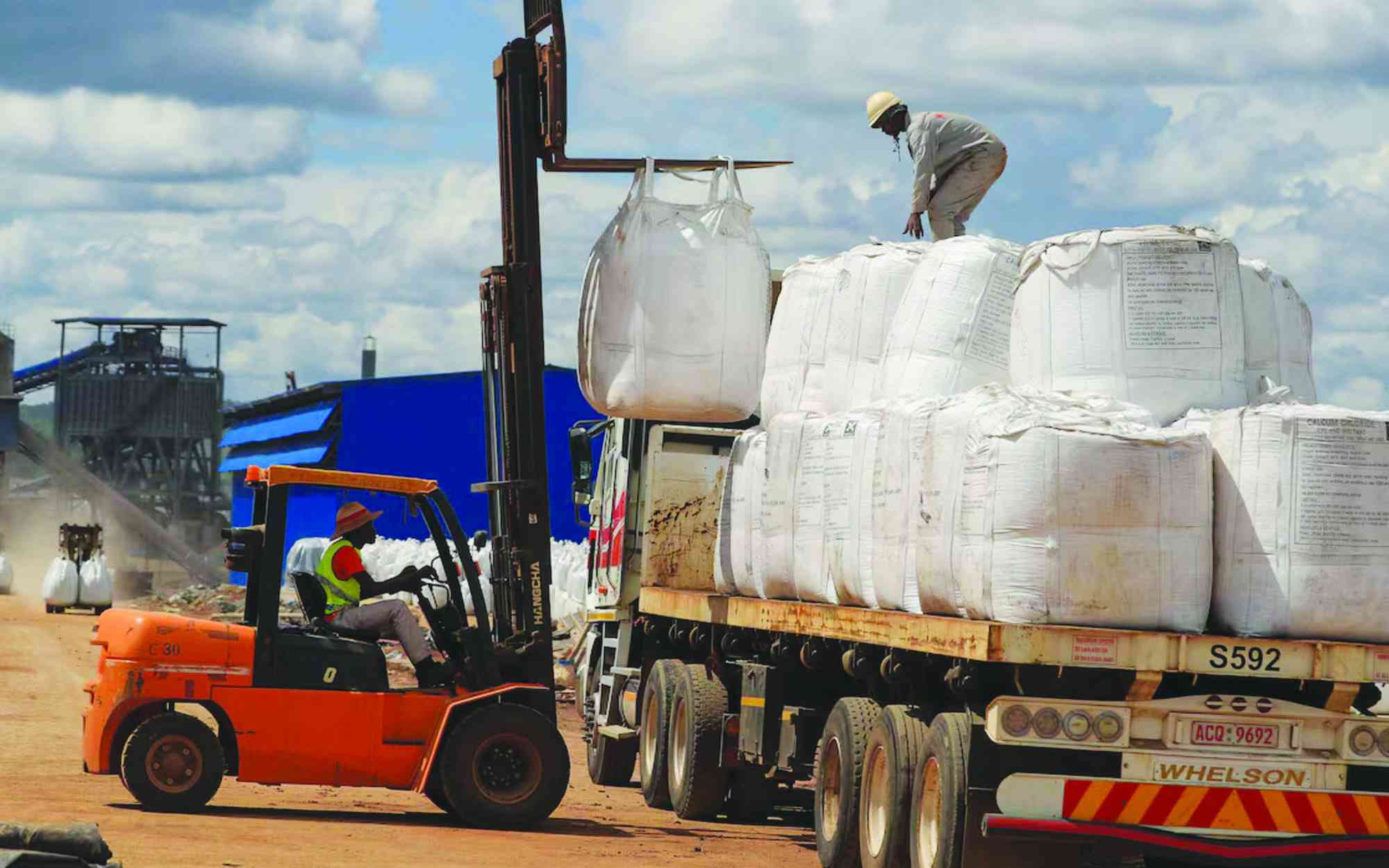
Zimbabwe possesses some of Africa’s largest hard-rock lithium deposits and has rapidly emerged as a strategic supplier in the global scramble for battery minerals. The country is now ranked among the world’s top lithium producers.
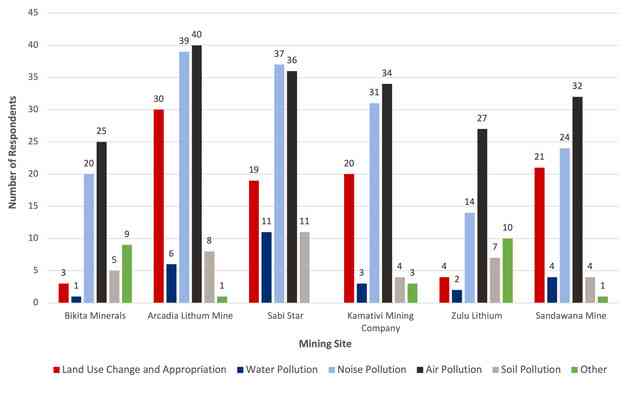
Massive investments at Arcadia, Bikita, Sabi Star, Kamativi and Zulu have transformed Zimbabwe into one of the world’s fastest-growing lithium hubs over the past five years.
But investigators said criminal networks have moved aggressively into the sector.
“The organised crime landscape is characterised by loosely-affiliated criminal networks rather than rigid hierarchical structures. These networks are highly influential, particularly in gold smuggling and money laundering operations,” the report said.
“State-embedded actors are heavily involved in Zimbabwe’s organised crime landscape. High-ranking officials are deeply involved in financial crimes, mineral smuggling and corrupt business practices.”
Mining remains central to government’s plans to rebuild its economy. Yet illicit financial flows (IFFs) continue to cast a long shadow over the sector.
Resource governance campaigners warned in 2024 that Zimbabwe could be losing as much as US$15 billion annually through IFFs.
Farai Muguwu, executive director of the Mutare-based Centre for Natural Resource Governance (CNRG), said at the time investigations into illicit flows had become more precise following high-profile exposés such as Al Jazeera’s Gold Mafia documentary.
Before those investigations, annual losses linked to IFFs were estimated at between US$2,7 billion and US$5,7 billion. If accurate, the US$15 billion estimate would exceed government’s entire US$12 billion mining target.
“It is looting at an industrial scale, IFFs are on the rise,” Muguwu said at the time.
Home Affairs minister Kazembe Kazembe previously revealed that Zimbabwe was losing approximately US$100 million worth of gold every month through smuggling and illicit trade — translating to about US$1 billion annually.
However, campaigners, including the International Crisis Group, believe the real figure could be significantly higher.
Another 2025 report exposed how a network of 23 shell companies operating in Zimbabwe and South Africa allegedly siphoned US$450 million through IFFs. The study, published in the Journal of Risk and Financial Management, analysed 1,8 million transactions using data from South Africa’s Financial Intelligence Centre (FIC), the Reserve Bank of Zimbabwe (RBZ) and SWIFT.
One of Zimbabwe’s most high-profile gold smuggling cases involved Henrietta Rushwaya, president of the Zimbabwe Miners Federation, which represents artisanal miners producing nearly half of Zimbabwe’s annual gold output.
In October 2020, Rushwaya — the former chief executive officer of the Zimbabwe Football Association — was arrested at Robert Gabriel Mugabe International Airport while allegedly attempting to smuggle six kilogrammes of gold to Dubai in her handbag.
She was later acquitted before resurfacing in Al Jazeera’s Gold Mafia documentary.
However, a statement issued by the Office of the Presidential Envoy and Ambassador-at-Large to the Americas and Europe, Uebert Angel, claimed that a voice featured in the documentary was not hers, but that of a decoy.
“It is these decoys who posed as Henrietta Rushwaya, the First Lady and the first son,” the statement said.
Angel, who featured prominently in the documentary, strongly denied the allegations raised by Al Jazeera.
In another case highlighting governance concerns in the mining sector, the Zimbabwe Independent reported in 2023 that authorities had launched investigations into the whereabouts of a US$4 million diamond parcel belonging to a businessman. The diamonds had reportedly been held by authorities for more than a decade.
Jonathan Samukange, who represented the businessman, told the Independent: “At one point, we had an appointment with all authorities involved in the matter after the acquittal of my client and we had a green light from the courts to get our diamonds back. That was when we realised that the parcel had been tampered with because there were no more customs seals.”
Mines and Mining Development Minister Polite Kambamura dismissed the report as incorrect.
“There is no such thing. No illegal lithium mining is taking place,” he said, adding that the government’s thrust for now is on in-country value-addition and beneficiation.