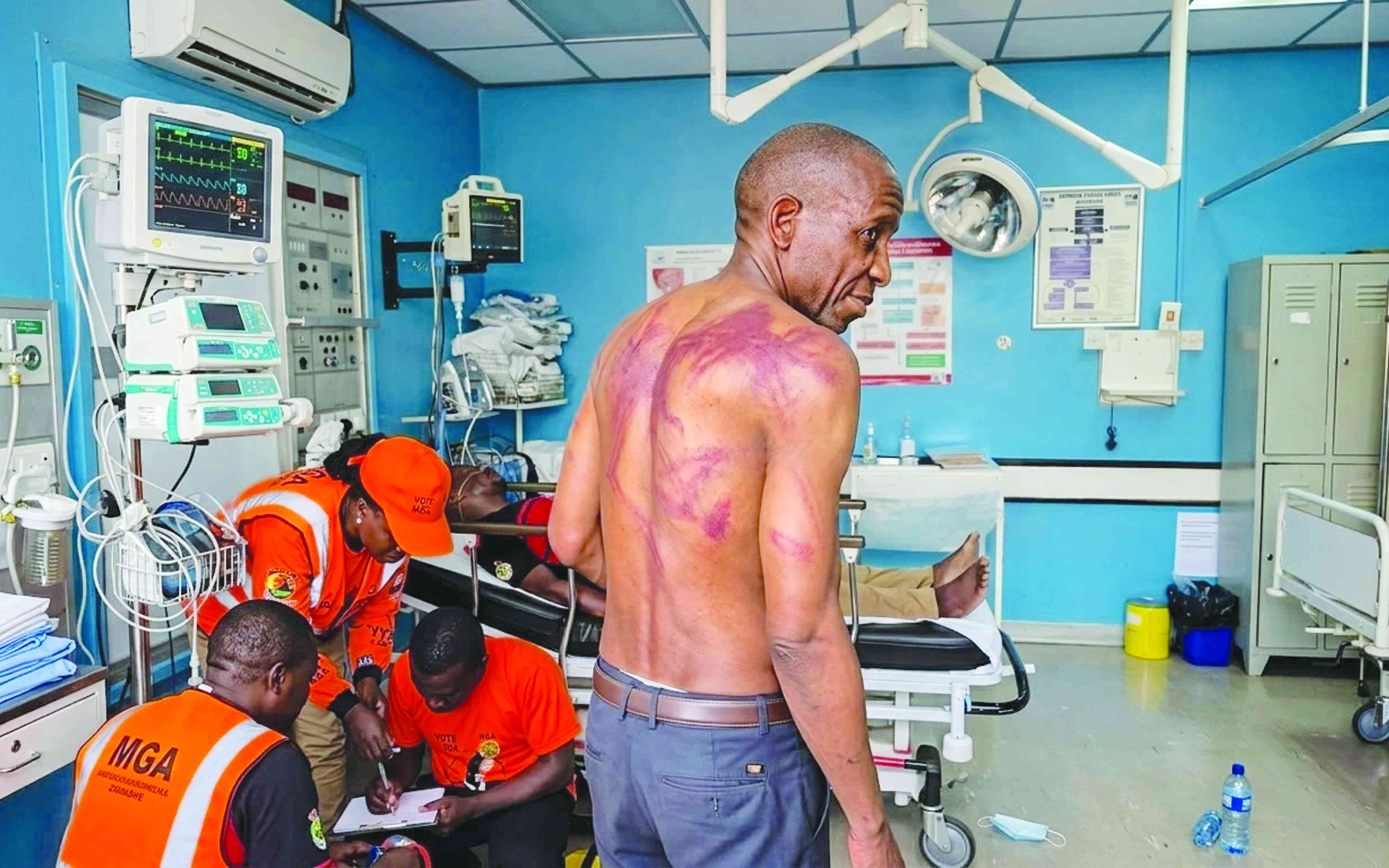
The blood has long dried, but the scars have not.
About one month after he was brutally assaulted in broad daylight, in an attack many believed bore the hallmarks of state security, Lovemore Madhuku walked back into the arena this week. It is an arena he knows too well. It was charged, volatile, and as always, unforgiving. And once again, it turned violent.
The man who has spent decades fighting for Zimbabwe’s Constitution found himself in familiar territory, confronting power, absorbing its blows, and refusing to retreat. This week, as Parliament rolled out its consultative process on Constitutional Amendment Bill No. 3 (CAB3), Madhuku joined a chorus of dissenting voices warning that the exercise had already been compromised.
What was meant to be a national conversation quickly descended into something else — a theatre of intimidation, exclusion and, at times, outright violence.
From Harare to Sanyati, from Bulawayo to other centres, the pattern was strikingly similar. Dissenting voices were drowned out. Some were denied entry, while others were physically removed. And in the middle of it all stood parliament — accused of presiding over a process that critics say had already been decided long before citizens were invited to speak.
For Madhuku, it might have been a deeply troubling moment.
“Parliament worked in cahoots with the ruling party to make sure that the only input we should get are inputs in favour of the State,” he said in an interview with the Zimbabwe Independent.
“They allowed their venues to be taken over by these people. Many of them arrived earlier, some even the previous day, and the venues were opened to them at the instance of parliament.”
- New perspectives: ‘We also died for this country!’
- Court grants businessman’s ex-girlfriend peace order
- New perspectives: ‘We also died for this country!’
- Salvation Army partners Padare in GBV fight
Keep Reading
Inside the venues, the choreography was unmistakable. Participants described a system where those aligned to the official position were identified and prioritised. Outside, hundreds remained locked out.
They were not heard, seen, and ultimately excluded from a process meant to reflect their voices.
In Harare, proceedings at the City Sports Centre were marred by violence, according to our sister paper, NewsDay.
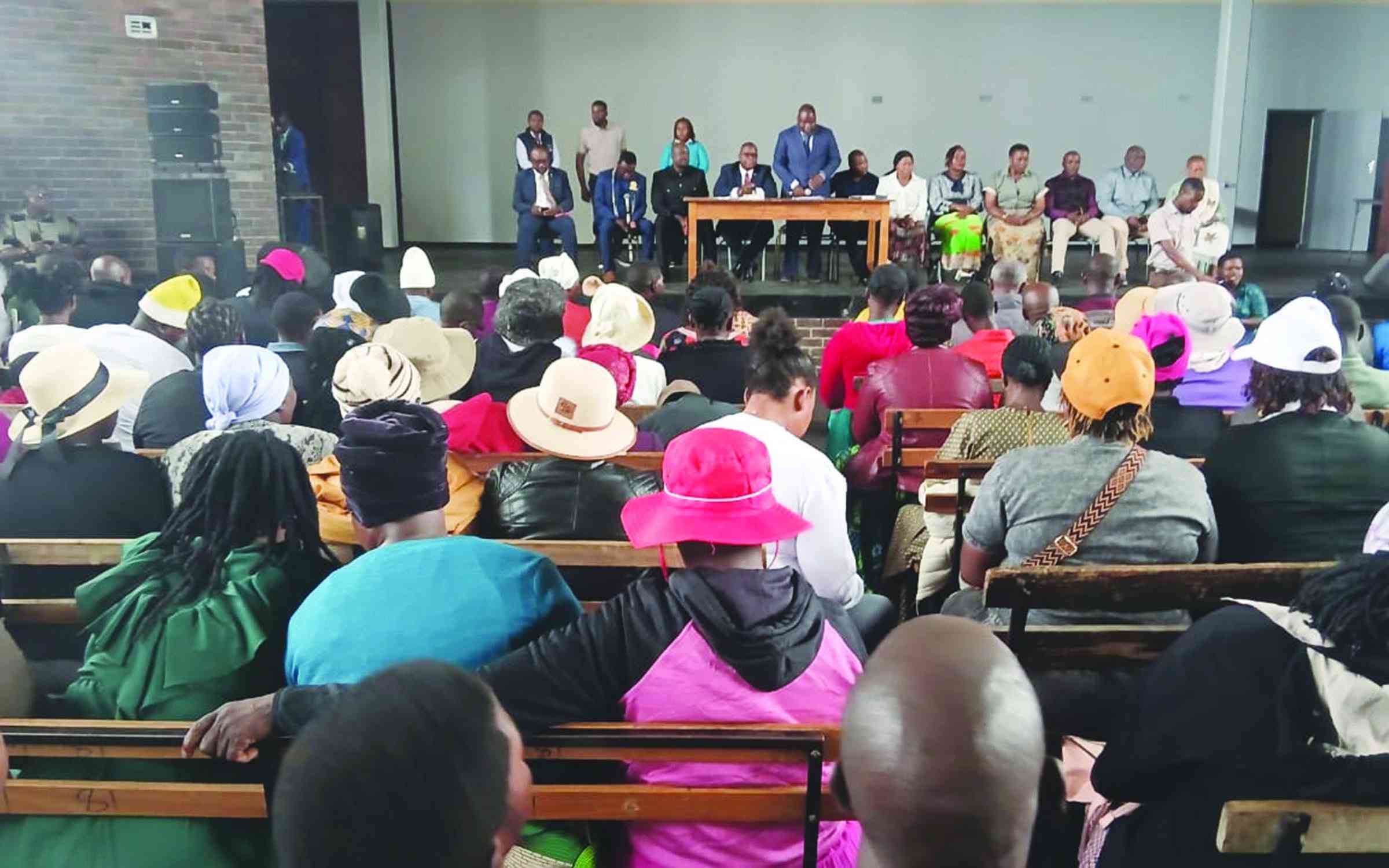
Groups of rowdy youths, believed to be aligned to the ruling Zanu PF, disrupted the hearings, blocking dissenting voices from contributing. When those opposing the Bill attempted to speak, tensions escalated into scuffles that abruptly halted proceedings, NewsDay reported.
Opposition leader Douglas Mwonzvora was beaten, while prominent lawyer Doug Coltart was assaulted, and his cellphone snatched in the chaos. Journalists covering the event were harassed and obstructed. Yet, through it all, parliamentary officials remained largely silent, raising troubling questions about whether the violence was being tolerated — or quietly sanctioned.
Similar scenes unfolded in Sanyati at Patchway Mine, where a participant attempting to contribute dissenting views was forcibly removed by a group of five individuals. Their justification was he was not from the area. This has increasingly become a convenient tool to silence opposing voices.
Investigations revealed that at several venues, key spaces where participants were selected were dominated by individuals allegedly “pre-selected and coached”. Hundreds of others were left outside, effectively excluded from the process.
Committee chairperson Dexter Mangaliso insisted he only recognised those who raised their hands. But he struggled to explain why hundreds of participants remained ignored.
Clerk of Parliament Kennedy Chokuda maintained that parliament was receiving submissions, but his remarks did little to ease concerns.
“The Clerk of Parliament has no interest in any submission … yesterday we received 500 submissions and it’s impossible to recall any one submission,” he told the Independent on Wednesday.
To critics, this reinforced a growing perception that the process was not designed to listen, but to legitimise. At the centre of the storm lies CAB3 — a Bill whose implications stretch far beyond the legal realm. If passed, it would extend President Emmerson Mnangagwa’s term from 2028 to 2030. It would also lengthen the tenure of parliamentarians and councillors, despite constitutional provisions that bar incumbents from benefiting from such changes.
More controversially, it proposes shifting the election of the President from a direct vote by citizens to selection by Parliament.
Critics say this would fundamentally alter Zimbabwe’s democratic foundation.
“Consultations are required by the Constitution — Section 141,” Madhuku said.
“The Bill has already failed that test. Our observation is that there is almost near-unanimity in the rejection of the Bill except for voices that were organised to say what they don’t even believe in. There is overwhelming rejection, total rejection. If those pushing this Bill cared about the country, they would drop this process even today. There is no need to continue.”
The resistance has not been confined to opposition figures.
In a development that has sent ripples through the political landscape, war veterans have broken ranks with the ruling establishment, joining the growing list of critics.
The Zimbabwe National Liberation War Veterans Association told the Independent it had documented serious irregularities during the hearings.
“The public hearings were presided over by Members of Parliament who stand to directly benefit from the passage of the Bill,” said chairperson Andrease Ethan Mathibela.
“This situation raises serious concerns about impartiality and undermines public confidence in the integrity of the process.”
The association also criticised the concentration of hearings in urban centres, arguing that rural communities were largely excluded from a process of national importance.
“These irregularities call into question the credibility, fairness, and legitimacy of the entire consultation process,” it said.
A separate group of former Zipra combatants went further, outrightly rejecting the Bill.
“As veterans of the liberation struggle, we carry a solemn and lifelong responsibility to safeguard the ideals for which the people of Zimbabwe sacrificed,” their statement read.
“These principles are not negotiable and cannot be amended to suit narrow interests.
“To proceed in defiance of this collective will is to undermine democracy and betray the very foundation upon which this nation was built.”
Civil society organisations, already weakened by tightening restrictions, also pushed back. Several have filed court applications challenging the Bill, arguing that a flawed process cannot produce a legitimate outcome.
But beyond the immediate political contest lies a deeper and more consequential battle — one that speaks to the structure of power itself.
A leading policy institute, the Centre for Research and Development (CRD), warned that Zimbabwe could be heading towards a constitutional rupture that entrenches elite control over vast mineral wealth.
In a scathing submission to Parliament, the CRD argued that CAB3 is part of a long-standing pattern in which constitutional changes have enabled the centralisation of power and the capture of national resources.
“This submission warns of a recurring historical pattern since 1980, where centralising power has facilitated the alienation of national wealth by siphoning resources into patronage systems to sustain power retention,” the organisation said.
The report traces this pattern back to key turning points in Zimbabwe’s history — from the 1987 creation of an executive presidency to land reform and the “opaque” management of diamond revenues.
Each phase, it argued, followed a similar trajectory.
It said power was consolidated, oversight weakened, and resources diverted.
The numbers are released by the organisation were startling.
Zimbabwe recorded over US$1,7 billion in diamond exports between 2010 and 2014, yet less than US$200 million reached the fiscus, it claimed.
An estimated US$32,1 billion was lost through illicit financial flows between 2000 and 2020, the organisations noted.
More than US$1,2 billion continues to be lost annually through gold smuggling.
For the CRD, these are not isolated failures but “symptoms of a system designed to sustain power rather than promote development”.
“By stripping away checks and balances, including direct presidential elections and independent judicial oversight, the State removes the essential guardrails intended to protect public trust,” the report said.
“The result is a system primed for extraction — not development.”
On the ground, the human cost is already evident.
At Redwing Mine, the report notes, haphazard mining in thousands of unregulated pits has claimed over 200 lives since 2020, with deaths continuing largely unnoticed, it claimed.
Meanwhile, strategic assets are being transferred into structure that have raised suspicions, it claimed.
Against this backdrop, CAB3 begins to look less like a legal adjustment and more like the culmination of a long-running process.
For Madhuku, this is not unfamiliar terrain. He has seen how constitutional shifts can reshape power — and how that power can be used.
This week, as he stood amid the chaos of disrupted hearings and rising tensions, the sense was unmistakable.
The battle is far from over.
For him, and for many others, the only legitimate path forward lies in returning the question to the people through a referendum.
Zimbabwe now stands at a crossroads.
A Constitution born out of broad national consensus in 2013 is being reshaped under deeply contested conditions.
Voices of dissent are growing louder — from opposition leaders, civil society, war veterans and ordinary citizens.
But so too is resistance.
The outcome of this process will determine more than political timelines. It will shape the country’s democratic trajectory, define how power is exercised, and influence whether Zimbabwe’s vast natural wealth serves its people or continues to disappear into opaque systems of control.
For now, the consultations continue, as the tensions persist.
And the butchered professor — scarred, unbowed — has returned to the frontline of a battle that may define a generation.