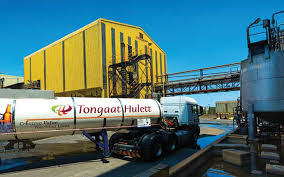
SOUTH Africa’s Supreme Court of Appeal (SCA) has laid bare a far deeper financial hole at embattled sugar producer Tongaat Hulett, ruling that the group owed R10,4 billion (about US$635 million) when it entered business rescue, almost double the figure underpinning its proposed debt-to-asset swap.
In a judgment dated December 15, 2025, the court's revelation of total debt owed by Tongaat shows the firm's R5,9 billion (US$360 million) debt-to-asset swap with the Vision Group represents only a portion of its liabilities.
The SCA also dismissed Tongaat’s bid to suspend statutory payments due under the Sugar Industry Agreement (SIA) during its business rescue.
Crucially, the court ruled that the SIA was not a private commercial arrangement but a form of subordinate legislation established under South Africa’s Sugar Act, making it binding on all industry participants.
The payments in question are administered by the South African Sugar Association (SASA), the sector’s statutory regulator.
In underscoring the wider economic implications, the court noted that the sugar industry generates about R24 billion (US$1,46 billion) annually and supports roughly 65 000 direct jobs and a further 270 000 indirect livelihoods.
Tongaat, South Africa’s oldest sugar miller, accounts for more than a quarter of domestic sugar production and around 40% of refined sugar supply.
In 2021 alone, its operations contributed an estimated R11 billion to national GDP. The group also has significant regional exposure, operating in Zimbabwe through Triangle Limited and Hippo Valley Estates Limited.
- Gringo Jnr to headline private medical players fundraising dinner
- Gringo Jnr to headline private medical players fundraising dinner
- Dance groups add sparkle to Ndau fest
- All set for gender-responsive budgeting summit
Keep Reading
The company was placed under voluntary business rescue in October 2022 after prolonged financial strain, governance failures and mounting creditor pressure.
The court’s confirmation of R10,4 billion in debt highlights the scale of value erosion that preceded the rescue.
According to the judgment, Tongaat’s distress is closely linked to its obligations as an “over-producer” under the SIA.
“As an overproducer, THL’s (Tongaat) output exceeds its domestic quota, obliging it to make significant redistribution payments to SASA,” the judgment reads.
“All THL’s sugar is currently sold domestically, which has led to underperformance in exports, a factor that further complicates the company’s financial situation.
“This situation has sparked a dispute between THL and SASA regarding the underlying causes of THL’s overproduction.
“THL maintains that its overproduction is not voluntary but rather a consequence of other millers reducing their refining capacity, which, according to THL, forced it to process additional cane to prevent waste and support growers,” it further states.
SASA, however, rejected this explanation, with the court noting the regulator’s position that Tongaat’s over-production stemmed from its own strategic choices.
The court revealed that the regulator’s position was that Tongaat’s production and sales should have accounted for industry quotas and market conditions.
Under the control of business rescue practitioners, Tongaat sought to rely on legal provisions allowing for the temporary suspension of certain payments, including those due to SASA, while it attempted to secure new funding.
The SCA was unpersuaded, finding that the suspension “created immediate uncertainty for growers and millers, as it threatened the flow of funds that underpin both industry stability and employment in affected communities”.
Ultimately, the R10,4 billion debt highlights the profound challenges facing the rescue.
“With mounting debts totalling about ZAR10,4 billion owed to roughly 1 000 creditors and all its assets pledged as security, THL’s prospects for recovery have become increasingly uncertain,” the judgement states.
“The company’s board chose voluntary business rescue as preferable to liquidation. This decision is acknowledged by all respondents as necessary to preserve value for stakeholders and potentially safeguard jobs, especially in vulnerable rural communities.”
- Even if the debt-to-asset swap is concluded, Tongaat Hulett’s long-term recovery, the court implied, is far from assured.