
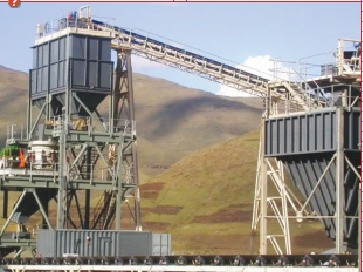
JENA Mines will require more than US$100 million in phased capital investment to fund a major expansion aimed at lifting gold output beyond 200 kilogrammes per month, general manager Alfred Madowe said.
The gold producer, owned by Mutapa Gold Resources, is currently focused on stabilising operations after a sharp recovery in production.
Output rebounded from 17kg in January to a projected 42 to 43kg in April — a level that is already generating monthly revenue of over US$6 million.
Madowe said the mine, which has only been developed to a depth of 250 metres despite significant untapped potential, is undergoing a stabilisation phase requiring less than US$10 million in capital this year.
“For a full-scale expansion, we are likely looking at capital expenditure in excess of US$100 million, although this would not need to be deployed all at once,” Madowe said.
“At present, we are undertaking what I would call stabilisation. This involves relatively modest capital expenditure — under US$10 million — to stabilise operations and ensure consistent performance.
“The next phase would be an interim upgrade, which would include adding one additional mill and making mining improvements to increase throughput from underground operations.”
An interim upgrade, estimated at about US$20 million, is expected to lift production to between 60kg and 80kg per month before a full-scale expansion pushes output beyond 200kg, he said.
- Mnangagwa renames Sovereign Wealth Fund of Zimbabwe
- Is Zim ready for Sovereign Wealth Fund?
- Mutapa Fund needs scrutiny
- Go back to the drawing board
Keep Reading
A key component of the expansion would be the sinking of a new central shaft to ease hoisting constraints — a move comparable to the US$67 million project undertaken at Caledonia Mining Corporation’s Blanket Mine.
Exploration spending could rise to around US$10 million to fully delineate targets, while investment in a larger processing plant is expected to exceed US$30 million.
“With the right level of capital, exploration and development, Jena can easily become one of the largest mines in Zimbabwe,” Madowe said.
“In terms of investment, it will need to be cumulative. Currently, we are investing about US$2 million in exploration, mainly to identify targets.
“Those targets will require further exploration, which could raise total exploration spend to around US$10 million or slightly more.”
The mine employs about 700 workers, a figure expected to rise to around 1 000 during the interim upgrade phase. However, Madowe said the full expansion would rely more heavily on mechanisation, limiting employment growth to roughly 1 500.
Jena, which Madowe described as having “arguably one of the best resources in the country”, is part of Mutapa Investment Fund (MIF), which has created commodity-focused subsidiaries to drive growth in the mining sector.
MIF chief executive officer John Mangudya said in April the fund would intensify efforts to secure long-term capital to support mining expansion in line with National Development Strategy 2.
Zimbabwe’s gold sector continues to anchor export earnings. In March 2026, semi-manufactured gold exports generated US$426,6 million, accounting for 45,8% of total exports, according to the Zimbabwe National Statistics Agency.
While small-scale miners contributed about 75% of output last year, large-scale operations such as Jena are increasingly seen as critical to sustaining production growth.
At Blanket Mine, a central shaft completed in 2021 at a cost of US$67 million enabled a tenfold increase in annual output to 2,4 tonnes.
Caledonia has maintained 2026 production guidance of 72 000 to 76 500 ounces despite a subdued first quarter.