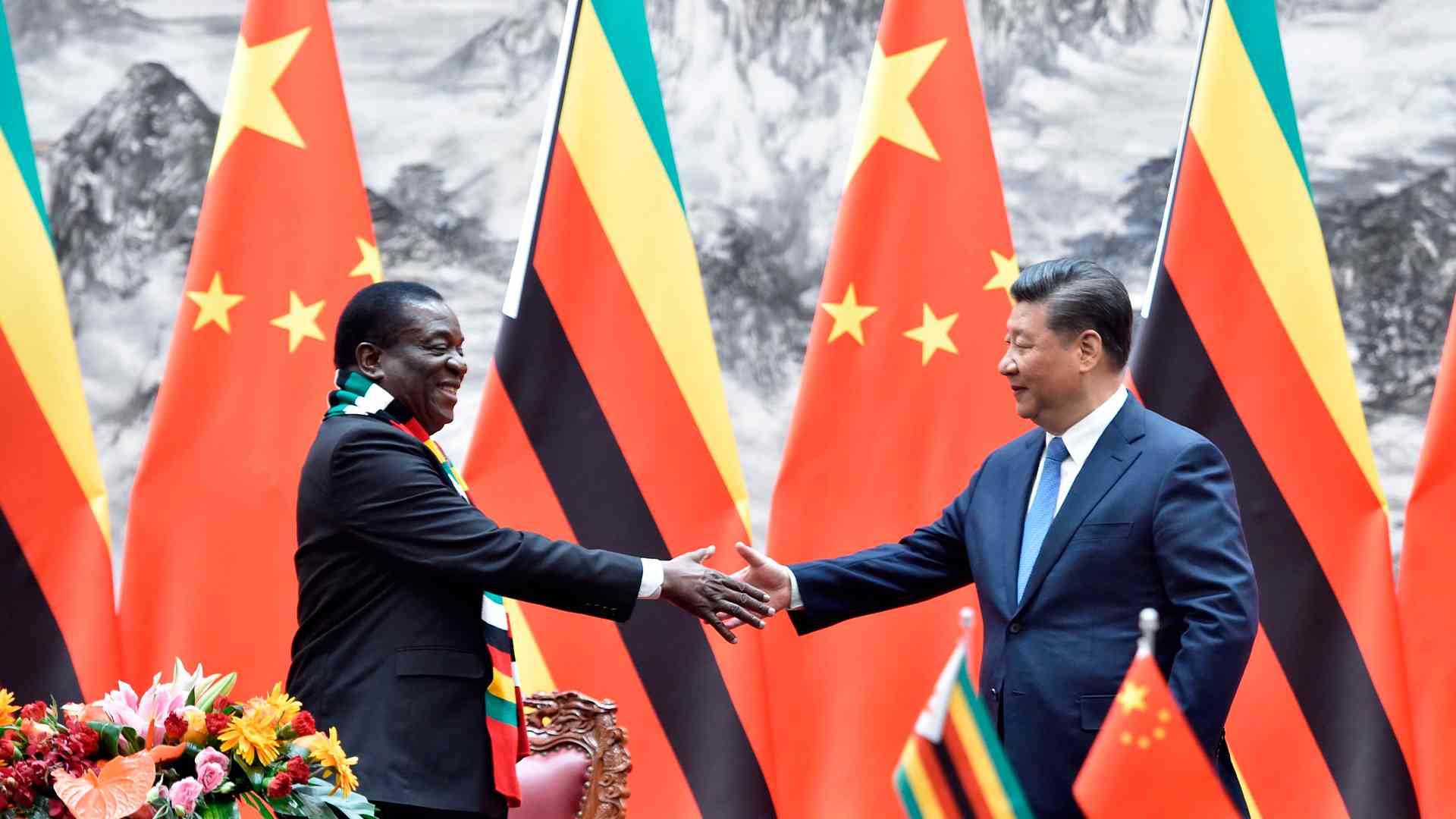

ZIMBABWE’S central bank is stepping up its push to restore the primacy of the local currency, rolling out upgraded Zimbabwe Gold (ZiG) banknotes and tightening policy levers in a bid to shift the economy away from entrenched dollarisation. In an interview with our deputy news editor Tinashe Kairiza (TK), Reserve Bank of Zimbabwe (RBZ) governor John Mushayavanhu (JM, pictured holding the new ZiG notes) outlines how improved cash availability, sustained exchange-rate stability and targeted structural reforms are expected to lift ZiG usage beyond current levels and set the economy on a path towards de-dollarisation. Find below excerpts from the interview:
TK: The central bank has introduced upgraded ZiG notes. How is that going to contribute in terms of utilisation and circulation of the local unit?
JM: The introduction of the upgraded ZiG banknotes is expected to make a meaningful contribution to the utilisation and circulation of the local currency. The Reserve Bank commenced the phased rollout of the Big 5 ZiG banknote series on April 7, 2026.
The initial phase focused on the ZiG10, ZiG20, and ZiG50 denominations, which are being introduced alongside the ZiG coins already in circulation. To ensure an orderly and stable increase in the supply of currency, the ZiG100 and ZiG200 are scheduled to be injected into the market in due course.
These upgrades are a direct response to prevailing market requirements. The enhanced physical durability of the new notes extends their lifespan, while the expanded range of denominations improves transactional convenience across different levels of economic activity.
Together, these measures address key constraints that previously limited the effective circulation of the local unit. As a result, the upgraded notes are expected to support wider acceptance, higher usage, and increased velocity of the ZiG in day-to-day transactions, thereby strengthening its role as a medium of exchange within the domestic economy.
TK: There are allegations that the central bank is manipulating the exchange rate.
JM: The allegation of exchange rate manipulation is inconsistent with the structural reforms implemented since the recalibrated Monetary Policy Statement of April 2024.
- Caledonia lays out Bilboes revival plan
- Letter from America: Gold Mafia: Zim government should rethink its policies!
- So, is it a currency?
- Will gold tokenisation work?
Keep Reading
The Reserve Bank has systematically transitioned to a flexible, market-led exchange rate system, in which ZiG’s value is determined through the willing-buyer willing-seller framework.
The RBZ has eliminated historical rigidities through targeted statutory instruments to ensure that price discovery remains in the hands of market participants.
It is standard global practice for a central bank to intervene solely to dampen excessive volatility and maintain orderly market conditions. These interventions are supportive of, rather than a substitute for, market forces.
As such, ZiG’s stability reflects this efficient price discovery and improved macroeconomic fundamentals, not administrative control.
TK: Currently, most are settled in US dollars.
JM: Although the majority of transactions, estimated at 60%, are currently settled in United States dollars, the economy is at a strategic inflection point. The Reserve Bank is focused on establishing a high-stability monetary environment that incentivises the increased use of ZiG.
Through the implementation of a prudent monetary policy framework and the enhancement of transactional convenience via the introduction of the upgraded banknote series, ZiG is being positioned as the logical currency for domestic transactions.
The Reserve Bank’s stated objective is to gradually increase the share of ZiG usage in transactions from the current estimated level of about 40%.
TK: Your comment on public confidence?
JM: Public confidence in the local currency has been strengthening, supported by a comprehensive month-long awareness campaign that concluded on March 31, 2026.
The campaign played a critical role in educating the public on the features and value proposition of ZiG and generated an overwhelming response nationwide. Feedback from the exercise indicates broad recognition that ZiG has demonstrated a level of stability that contrasts positively with previous currency experiences. This growing confidence is emerging as the primary driver of renewed public acceptance and willingness to transact in the local currency.
In parallel, the sustained achievement of single-digit inflation has contributed to narrowing the confidence gap between ZiG and foreign currencies.
The RBZ’s overarching policy objective is to reach a state of consumer indifference, where economic participants are equally comfortable holding and transacting in either currency. Continued prudent management of money supply conditions is central to ensuring that ZiG remains stable, predictable, and attractive as a store of value and medium of exchange.
TK: What other measures are you implementing?
JM: Additional structural measures include the recalibration of the proportion of government taxes payable in ZiG, as well as the expanded use of the local currency in the payment of public sector goods and services. These interventions are expected to materially increase the contribution of ZiG in overall transactional activity.
Furthermore, the Reserve Bank has directed banks to raise the proportion of local currency cash allocated for ATM replenishment from 1% to 3%.
Over time, this measure is expected to enhance ZiG cash circulation and increase cash-based transactions, thereby supporting liquidity management, payment convenience, and ongoing efforts to deepen confidence in and usage of the local currency.
To read full article, visit: www.theindependent.co.zw