FOR years, Southern Africa’s busiest borders have been bottlenecks trapped in paperwork, plagued by fraudulent insurance documents, and slowed down by outdated verification systems.
But on an ordinary Tuesday morning in December , a quiet technological revolution signalled the end of that era.
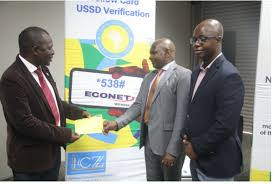
With a simple USSD code ,*538#, Zimbabwe became the 10th COMESA country to plug into a real-time insurance verification network that leaders believe could fundamentally reshape the economics of cross-border trade.
The launch of the Digital Yellow Card USSD application, a tiny interface with outsized implications, marked what has been described as the region’s boldest step yet in dismantling fraud, speeding up border processes, restoring trust in regional insurance, and laying the foundation for harmonised third-party motor insurance across Eastern and Southern Africa.
The COMESA Yellow Card Scheme, responsible for uniform third-party motor vehicle insurance for travellers across 13 countries, issues more than 300,000 policies annually and generated US$17.23 million in premiums for the 2022/23 period.
Behind these impressive statistics lies a stubborn threat ,that is, the proliferation of counterfeit Yellow Cards, which exposes governments to lost revenue, compromises road safety, and undermines regional trust.
Speaking during its launch in Harare on Friday, Comesa Yellow Card Council of Bureaux Secretariat (CBS) chief executive officer Calven Mutyavaviri said verification of the authenticity of the yellowcard could never be easier.
“Firstly, we have an issue of fake documents, fake yellow cards. So with this USSD platform, we are therefore to verify the authenticity of the card that has been issued. And this is done online, so it's a straightforward, transparent and very smooth process.With instant, tamper-proof verification, the digital platform closes the gap in which fraud has thrived for decades,"he said
- Sex worker falsifies armed robbery
- PWDs demand ratification of Africa Disability Protocol
- Zimbabwe plugs into COMESA’s real-time insurance network
Keep Reading
Acting Chief Director - Economic Cooperation, International Trade and Diaspora Sienzeni Mateta described the system as a strategic economic tool.
"This is a significant stride towards enhancing the efficiency of cross-border trade.The Yellow Card’s uptake represents the strengthening of economic ties within our region,"she said
The Zimbabwe Republic Police reinforced the point, with assistant Assistant Commissioner Gajiwett Gomo noting that manual processes had sometimes led to delays, inaccuracies, and, in some unfortunate cases, fraud.
"This is a solution that will transform the way we verify the authenticity of the Yellow Card,"he said
For border officials, what was once a lengthy, friction-filled procedure now takes seconds , reducing queues, minimising harassment, and limiting opportunities for rent-seeking behaviour.
Interviewed on the sidelines of the event, James Mharadze, Chairperson of the COMESA Council of Bureaux, made it clear that this launch is only the beginning of a broader digitalisation journey.
" Indeed. This is just the beginning but a key step. The digital claims project has already started and very soon such uploads will be rolled out. Zimbabwe will be at the forefront. Complete digitalisation is expected in the next 18 months.Expansion is really possible. COMESA yellow card is currently working on a project to embed a regional medical cover for drivers on the yellow card product. This project will result in the adoption of a common, regional travel medical insurance across the COMESA region. Zimbabwe is chairing the technical committee tasked to steer this project. This is just the beginning of a long term project to make the yellow card a fully packaged product to meet the various and growing needs of our citizens,"he said
With fraud expected to decline, he confirmed that premiums may also eventually decrease.
"In the long term reduced fraud translates into reduced pricing for the yellow card across the COMESA region.Adjustments usually respond to claims performance. What we envisage is an increase in limits of cover in Zimbabwe because of the good performance in the medium term, this is a better form of repricing as it benefits our citizens who are protected by the yellow card. Across the region, we are working on a project to harmonise third party limits so that there is equality in cover across the COMESA region,"he said
For Zimbabwe, strategically located as the main gateway between South Africa and the northern transport corridor, the benefits are immediate: better protection for citizens, smoother transit flows, and a stronger regional insurance reputation.
The ICZ, which has recorded consistent growth of more than 10% annually in Yellow Card issuance, believes the new system will accelerate uptake further.
The Yellow Card has already expanded into non-COMESA markets like Mozambique and South Africa through a B2B strategy.
The long-term vision is even more ambitious, involving harmonisation with regional schemes such as the EAC’s Brown Card.
This would allow transporters to move across SADC, COMESA, and East Africa with a single insurance card , a potential game-changer for regional integration, logistics efficiency, and trade competitiveness.
Regulators also view the digitisation as a crucial step in modernising insurance oversight.
IPEC director Sibongile Siwela described the platform as “a game-changer in tackling fraudulent Yellow Cards and in upholding the integrity of our regional third-party motor insurance framework.”
She said the system enhances transparency for enforcement agents while reducing administrative friction for insurers and giving policyholders greater peace of mind.
As Zimbabwe pushes for broader digital transformation in governance and service delivery, the system fits squarely into national priorities for secure, technology-driven public services.
For border agencies, the immediate imopact will be felt in shorter queues, fewer disputes, and a simplified verification process. For motorists, it promises safer cross-border travel and protection against fake insurance vendors. For insurers, it closes revenue leaks and improves claims management.For governments, it strengthens compliance and bolsters regional integration efforts.
Ultimately, if Africa is to unlock the full potential of intra-continental trade, systems such as this simple, secure, and based on shared digital infrastructure , are indispensable.
As Mateta urged stakeholders to embrace the new technology, she framed the launch as more than a digital milestone.
Mateta described the initiative as “a beacon of what is possible when we embrace technology and cooperation,” calling on the region to “continue to build a more integrated, secure, and prosperous COMESA.”
If the momentum continues, the humble *538# code may go down as one of the most quietly transformative innovations in the history of regional mobility ,turning a once-fragmented insurance landscape into a predictable, trusted, and fully digital ecosystem.
Moreover,this will become more extensive as the code is expanded to other networks.