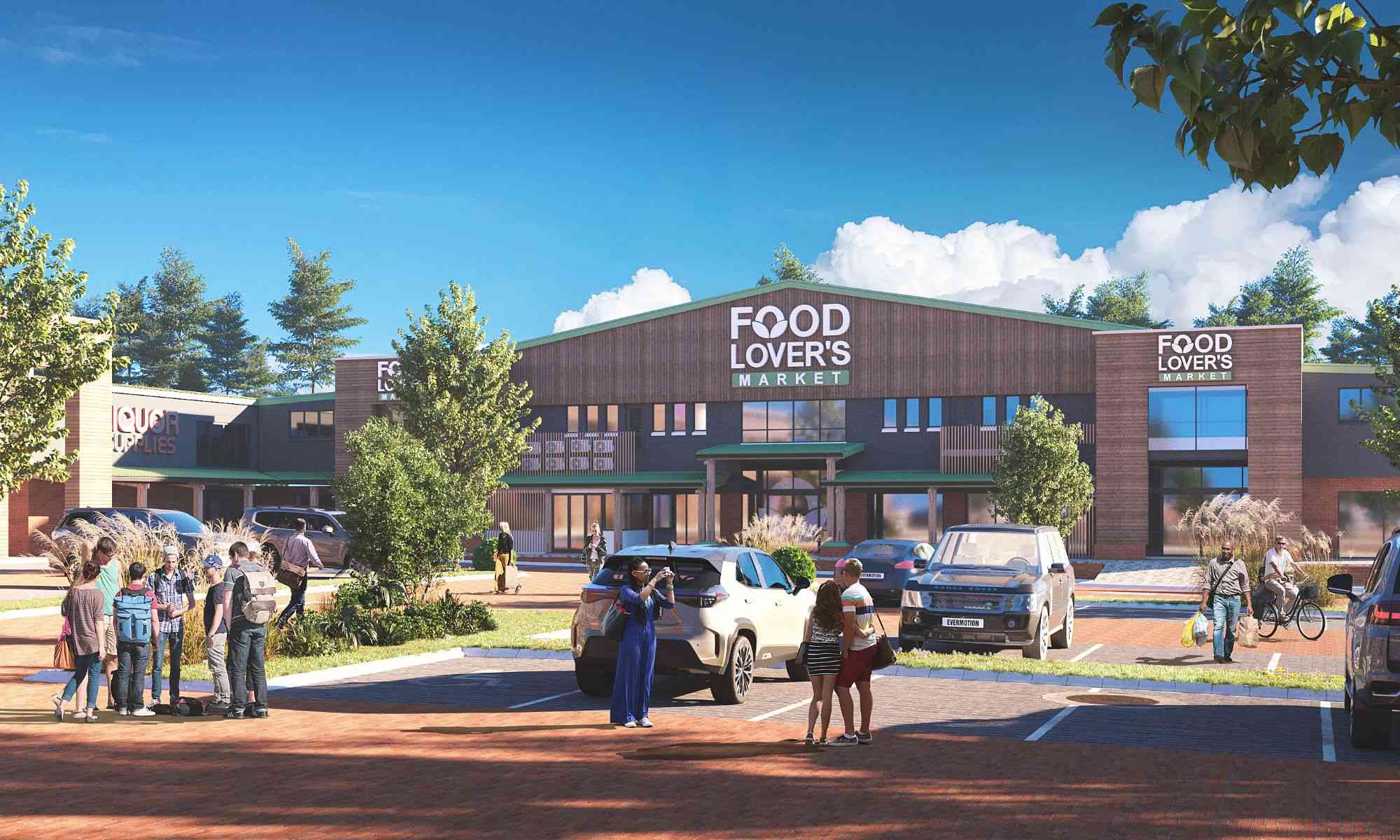
There is a queue at Food Lover’s Market in Greendale, Harare, that tells you everything you need to know about the future of retail in Zimbabwe. It is not a queue born of scarcity, not the reluctant shuffle of people waiting because there is no alternative, but a genuine crowd of willing shoppers, six days a week, in one of the toughest retail markets on the continent. The car park overflows. The expansion into a larger, better-equipped space was not a vanity project; it was a survival response to demand that the original building simply could not contain.
Meanwhile, up the road, two other Food Lover’s outlets — the ones in Avondale and Borrowdale operated under the umbrella of OK Zimbabwe — have shut their doors for good. OK Zimbabwe itself, once the undisputed anchor of Zimbabwean formal retail, has spent the past two years lurching between crisis points, eventually requiring a US$20 million rights offer just to remain operational, with ambitions to raise as much as US$30 million in total to stabilise the business.
The contrast is not incidental. It is instructive.
To understand why smaller is beginning to outperform bigger, you first have to appreciate what big actually costs.
Zimbabwe’s retail sector was valued at roughly US$2,5 billion in 2025. That sounds like a healthy number until you examine who is actually capturing value within it. The formal chains, OK Zimbabwe and TM Pick n Pay, together hold an estimated 60% to 70% of the urban formal retail market. But formal retail is not where most Zimbabweans shop. Informal tuckshops account for 70% to 80% of rural and low-income trade, and the informal economy as a whole accounts for 76% of GDP according to ZimStat. A sector worth US$2,5 billion on paper is, in practice, one where the formal players are fighting over a shrinking slice.
Running a chain supermarket in this environment is not simply difficult; it is structurally punishing. OK Zimbabwe’s operating costs doubled in a single financial year, driven by surging energy bills, generator dependency, rising utility tariffs and National Employment Council-mandated wage increases. The company’s half-year US dollar revenue then collapsed by 84% to just US$28 million by September 2025.
Pick n Pay’s South African parent wrote down its entire investment in TM Supermarkets to zero, citing currency volatility and hyperinflationary conditions. These are not companies that made a few poor decisions. They are companies whose operating model was designed for an economy that Zimbabwe has not been for some time.
The informal sector has understood this far longer than the boardrooms have. Tuckshops operate with a structural cost advantage of 30% to 50% over formal retailers, primarily because they are not bound by VAT obligations, corporate tax, or exchange rate regulations.
- Business giant Chiura laid to rest
- Zimpost defrauded of $13m
- Credit officer advances US$83k to ‘ghost’ clients
- Gardener steals employer's US$70k,confesses 11 months later
Keep Reading
A customer who needs cooking oil or washing powder can often find it cheaper three streets from the nearest chain store, sold from a room with no overheads and no compliance burden. That is not a market distortion to be corrected, it is a market signal to be read.
Nor is this dynamic unique to Zimbabwe. Boston Consulting Group found that across Africa, consumers buy more than 70% of their food and household goods from small, independent shops. In Kenya, that figure is 77%; in Nigeria, small neighbourhood grocers remain the dominant channel by volume despite the presence of well-resourced chains.
The African consumer does not default to the supermarket. Convenience, proximity and price win, and they have always won. What Zimbabwe is experiencing is not an aberration. It is the continent’s retail reality arriving with particular force.
Food Lover’s Greendale did not set out to disrupt anything. It started, in its earliest incarnation as Honeydew Market, as a farm stall on a 12-acre smallholding along Greendale Avenue in 1982. The Willcox family, passionate about fresh produce and rooted in the land, built something from the ground up over four decades. The business grew not by replication, but by depth.
Today, it carries the remarkable distinction of being the third busiest branch of the Food Lover’s franchise across all of Africa, out of 136 branches continent-wide. It is not a flagship in Johannesburg or Cape Town. Attempts to explain this through geography miss the point.
Research by Money & Moves, conducted with Injecta Analytics in 2025, mapped upper-income households within a two-kilometre radius of Honeydew Shopping Centre and found nothing that gave Greendale a decisive locational edge. Spar, TM Pick n Pay, and Bon Marché all operate in comparable catchments nearby. The customers who fill the Greendale car park are not all local. Many drive past those alternatives on purpose.
Zimbabwe is a largely an agrarian economy and horticulture is well understood here. There is nothing on Food Lover’s Greendale’s shelves that a competitor could not also source. The product is not the advantage. The model is. Food Lover’s Greendale runs a single site, which means every saving in electricity, administration, logistics and management goes directly into the margin it offers the customer.
Its supply relationship with Food Lover’s South Africa adds a further pricing lever, bringing imported goods in at exchange rate terms that a locally-anchored chain cannot easily replicate. The result is a store that can charge less than its formal competitors for the same goods, not because it has access to something they do not, but because it carries none of the overhead weight they cannot shed.
The Willcox family put it plainly: getting fresh produce from their growing operation into the store in the shortest possible time is central to everything they do. That is an owner’s discipline. It cannot be written into a regional operations manual or enforced from a head office three cities away. It is the kind of standard that only holds when the person setting it is also the person answerable for it, every single day.
There is a concept in business strategy sometimes called the cost of complexity. As an organisation grows, the costs of coordination, communication, and control grow disproportionately. Every new store a chain opens is not just an asset; it is a new surface area for things to go wrong.
OK Zimbabwe currently manages 69 stores: 69 sets of supplier relationships, 69 staffing situations, 69 buildings drawing from an unreliable grid, 69 points at which a stockout or a pricing error can damage the brand. When things go wrong at one, the cost lands on all of them. There is no ring-fencing a reputation across a network that large.
A single-store operator is structurally immune to most of this. They respond to a supply disruption not by convening a meeting, but by picking up the phone to a supplier they know personally. They adjust pricing not through a pricing committee, but by reading their own shelves and their own customers. The chain’s advantage, its scale and its buying power, becomes a liability the moment the environment turns volatile. And in Zimbabwe, the environment is reliably volatile.
This is precisely why the tuckshop has proved so durable as a format. It is not that tuckshop operators are more talented than the people running OK Zimbabwe or TM Pick n Pay. It is that their structure allows them to move at the speed the market demands. The single-store formal retailer sits at the intersection of these two worlds: the standards and trust of the formal sector, with the agility and cost discipline of the informal one. That is a genuinely powerful place to operate from.
Zimbabwe is not alone in working through this. Across Africa, the chains that have come undone have most often done so not because the market rejected them, but because they outran their own ability to execute.
Kenya’s retail sector offers the clearest cautionary tale. Nakumatt and Tuskys, once the dominant supermarket chains across East Africa, both collapsed under the weight of rapid expansion, weakened management and cash flow that could not keep pace with their footprints. The retailers who replaced them, Naivas and Quickmart most prominently, succeeded by expanding carefully and protecting quality at every new site before opening the next.
A format is not just a floor plan; it is a set of commitments about cost, service and consistency. When those commitments cannot be honoured at every site, the format becomes a liability. Food Lover’s Greendale has never faced that problem because it has never tried to be in more than one place. It solved Greendale, and it has kept solving it for over 40 years.
None of this is an argument against growth. It is an argument about the form growth should take.
Food Lover’s Greendale’s current expansion at Honeydew Lifestyle Centre is instructive precisely because of what it is not. It is not a second store in Bulawayo or a franchise agreement with a shopping mall developer in Mutare. It is a deeper investment in the same location. The store is growing into itself, not outwards. That is sustainable ambition. It compounds what already works rather than diluting it across distances the business cannot yet manage.
This is the model Zimbabwe’s retail future may increasingly reward. Not 10 stores with average execution, but one store with exceptional execution. Not a brand spread thin across a fragile economy, but a destination that people choose to travel to. The economics of concentration, in a market where complexity destroys margin, are far more compelling than they appear from the outside.
Even Pick n Pay has begun to read the same signal. After closing its branches in Chegutu, Harare Street and Southwold, the chain is now directing new investment towards high-potential, high-certainty locations: mining towns with stable US dollar incomes, specific urban nodes where demand is predictable. It is a large organisation learning, slowly and at some cost, what a single-site operator knows instinctively: that presence without performance is not an asset. It is a liability dressed as ambition.
Zimbabwe’s retail environment will not reward the retailer that is everywhere. It will reward the retailer that is excellent somewhere.
Formal retail’s genuine advantage over the tuckshop and the informal trader is not square footage or product range. It is the ability to offer a consistent, trustworthy experience, the kind of place a customer returns to not because it is the only option, but because it has never let them down. In a country where economic volatility has eroded trust in almost every institution, that reliability is not a small thing. It is, for many consumers, the whole point.
Food Lover’s Greendale has built exactly that. It has not tried to be all things to all people across all of Zimbabwe. It has tried to be the best possible version of itself for the people it already serves, and it has kept that promise for more than four decades. The result is a store that functions as a community institution as much as a retailer: somewhere people plan their week around, not just their shopping list.
The future of retail in Zimbabwe belongs to operators who understand that the size of your ambition and the number of your stores are not the same thing. It belongs to those who manage their costs ruthlessly, know their customers personally and refuse to expand until they are certain they can maintain the standard that made them worth visiting in the first place.
The queue at Greendale is not going anywhere. If anything, as the chains continue to reckon with a market they were never fully built for, it will get longer.
- Muhamba is a business analyst, market researcher and the AMH Group chair’s executive assistant. — [email protected]