
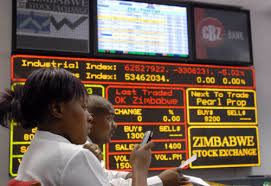
Dual listings are often viewed as a sign of capital markets maturity. They allow a company to trade on more than one exchange, often in different currencies, broadening its investor base, while improving liquidity and price discovery.
Across regional and global bourses, dual listings are common. On the Victoria Falls Stock Exchange (VFEX), they are increasingly becoming the norm. On the Zimbabwe Stock Exchange (ZSE), however, they are conspicuously absent. The contrast is telling.
VFEX: cross-border capital hub
The VFEX has positioned itself as a United States-dollar denominated offshore exchange, designed to attract foreign capital and offer free repatriation of funds. Its structure has made it a natural home for dual listed counters.
Caledonia Mining Corporation plc provides a textbook example. The company maintains its primary listing on the NYSE American in the United States, trades depositary interests on the London Stock Exchange’s AIM in pounds sterling, and lists depositary receipts on the VFEX in US dollars. The same underlying business — a Zimbabwean gold producer — trades seamlessly across three jurisdictions and currencies.
Invictus Energy follows a similar structure. Primarily listed on the Australian Securities Exchange (ASX) in Australian dollars, it also trades on the OTCQB in the United States and, since August 2024, on the VFEX via Zimbabwe Depositary Receipts (ZDRs), allowing local investors to participate in the Cabora Bassa gas project in US dollars.
Kavango Resources, primarily listed on the London Stock Exchange, added a secondary VFEX listing in September 2025. Nedbank Group’s Zimbabwe Depositary Receipts trade on the VFEX while the primary shares remain on the Johannesburg Stock Exchange (JSE). Seed Co International is primarily listed on the Botswana Stock Exchange but maintains a secondary VFEX listing after migrating from the ZSE in 2020.
In each of these cases, the VFEX has become the Zimbabwean gateway for internationally-structured capital, operating in US dollars with fungibility mechanisms that allow alignment with primary listings.
- Inaugural Zim investor indaba highlights
- Stop clinging to decaying state firms
- ZB explores options to tackle inflation
- Zim operations drive FMB Capital
Keep Reading
In contrast, the ZSE currently has no dual listed counter.
This was not always the case. Prior to 2020, counters such as Old Mutual, PPC, and Seed Co International were dual-listed. However, in March 2020, the government suspended fungibility of dual-listed shares amid foreign currency market instability. By June 2020, trading on the ZSE was suspended entirely. When trading resumed in August 2020, Old Mutual and PPC remained suspended. They remain so to this day.
Seed Co International migrated to the VFEX, with its ZSE listing terminated in October 2020.
Since then, the ZSE has operated as a purely domestic exchange, trading in local currency — now the Zimbabwe Gold (ZiG) — but without fungibility mechanisms.
Tanganda Tea Company briefly appeared poised to change that narrative. In October 2024, the company outlined plans to create a new class of shares and pursue a secondary listing on the VFEX to raise hard currency capital. That strategy was abandoned in July 2025.
Instead, Tanganda has proceeded to raise US$8 million via a renounceable rights issue on the ZSE while retaining its primary listing. The decision may have been influenced by regulatory considerations, capital structure implications, or approval dynamics. The precise reasoning remains unclear.
What is clear, however, is that the ZSE remains without a single dual listed counter.
Fungibility dilemma
At the heart of the issue lies fungibility — the ability to move shares or capital between exchanges without distortion.
Authorities have consistently commended the stability of ZiG, citing improved reserves, tighter monetary management, and single digit inflation. The macro-economic messaging has been constructive.
Yet the capital market architecture tells a different story.
Investors can sell shares on the ZSE in ZiG. However, converting ZiG proceeds into US dollars through formal channels to invest on the VFEX remains constrained. Conversely, funds from the VFEX can move into the domestic market more fluidly.
This asymmetry creates structural segmentation between Zimbabwe’s two exchanges.
It also undermines the feasibility of dual listings on the ZSE. For dual listings to function effectively, there must be credible currency convertibility, price alignment mechanisms, and regulatory clarity.
Without fungibility, price arbitrage becomes distorted. Without currency mobility, cross-border investors hesitate. And without those elements, companies may prefer listing on the VFEX or offshore rather than a ZSE listing.
Globally, major bourses — the JSE, London Stock Exchange, ASX, and NYSE — accommodate dual listings as part of normal capital formation. Botswana’s exchange hosts companies with multi-jurisdictional footprints. Even within Zimbabwe, the VFEX has embraced the model.
The ZSE’s absence from this ecosystem raises structural questions. Is the current framework an enduring policy posture prioritising fixed exchange rate stability over market integration?
Capital markets thrive on confidence, predictability, and convertibility. Stability in inflation is necessary, but not sufficient.
For the ZSE to evolve into a competitive regional exchange while trading in ZiG, several elements would need to be addressed, including clear reinstatement of fungibility mechanisms, transparent currency conversion frameworks, regulatory alignment between ZSE and VFEX structures and reinstatement clarity for suspended counters such as Old Mutual and PPC.
Stability narratives must ultimately translate into structural reform. The market will be watching!
Taimo is an investment analyst with a talent for writing about equities and addressing topical issues in local capital markets. He holds a First Class Degree in Finance and Banking from the University of Zimbabwe. He is an active member of the Investment Professionals of Zimbabwe community, pursuing the Chartered Financial Analyst charter designation.