
Former Zimbabwe Defence Forces commander Philip Valerio Sibanda is set to be appointed to cabinet under a new plan to restructure the Ministry of Lands, Agriculture, Fisheries, Water and Rural Development, with sources indicating he is expected to take over the Lands portfolio, the Zimbabwe Independent has learnt.

He is also tipped for appointment to the ruling Zanu PF party’s Politburo following his retirement from the army last year.
The Agriculture ministry is currently one of government’s largest and most complex portfolios, carrying a wide range of responsibilities spanning land administration, food production, fisheries, water resources and rural development.
This week, Information, Publicity and Broadcasting Services minister Jenfan Muswere described reports of the impending appointment as “speculation”, but acknowledged the President’s constitutional authority to reshuffle cabinet.

“There is nothing of that nature,” Muswere told the Independent. “These are merely speculations. We work with the prevailing status quo, and the President has the constitutional authority to make changes to his cabinet without limitation.
“Should there be any developments, the media will be informed accordingly.”
- Govt bemoans lack of skilled ICT staff
- Potraz moves to curb ‘harmful’ content
- ‘Zim online security lagging behind’
- Govt commissions CICs
Keep Reading
Efforts to obtain a comment from Sibanda were unsuccessful.
However, multiple sources said discussions underway would see the lands component separated from the broader ministry, with Sibanda — who retired from the military in November — likely to be appointed Minister of Lands if the restructuring is implemented.
Under the proposed arrangement, current Agriculture minister Anxious Masuka would retain responsibility for agricultural production, fisheries, water and rural development, according to officials familiar with the matter. The sources cautioned that while deliberations were at an advanced stage, final decisions were yet to be taken.
For Sibanda, the move would mark a significant transition after decades in uniform, shifting from a military career into frontline civilian governance.
Officials said the proposed reshuffle forms part of a broader effort by the government to recalibrate cabinet and tighten oversight over politically-sensitive portfolios.
Land remains Zimbabwe’s most emotive and contested policy area.
It has re-emerged as a political flashpoint, with disputes over multiple farm ownership, elite accumulation and insecure tenure, threatening to unsettle rural constituencies and complicate investment efforts.
“General Sibanda is earmarked for cabinet,” said a senior government official familiar with the deliberations. “The lands portfolio is being carved out, and he is seen as someone the President trusts to manage the politics around land, particularly disputes involving war veterans, senior party officials and powerful interest groups.”
Sibanda rose from a Zimbabwe People’s Revolutionary Army (Zipra) guerrilla fighter during the liberation struggle to become commander of the Zimbabwe Defence Forces, serving under both the late former president Robert Mugabe and President Emmerson Mnangagwa.
During his tenure as military chief, he was regarded by political insiders as a steadying influence within the security establishment. His retirement late last year was widely interpreted as clearing the way for a senior civilian appointment. Since then, speculation over his next role has intensified.
The proposed split of the agriculture ministry is viewed by officials as both a political and administrative calculation. Masuka, a trained agricultural scientist, has been credited with strengthening production planning, rolling out climate-resilient farming programmes and stabilising certain elements of food output following successive droughts.
However, critics argue that land administration has lagged behind, remaining highly politicised and vulnerable to elite capture, undermining broader agricultural reform efforts.
Separating land governance from agricultural production could sharpen focus and accountability. Civil society organisations, however, have cautioned that appointing a former senior military officer to a civilian land portfolio could deepen perceptions of politicisation in land administration if not accompanied by transparency and institutional reform.
If confirmed, Sibanda’s appointment would continue a long-standing trend in which retired senior public officials are deployed into strategic civilian roles.
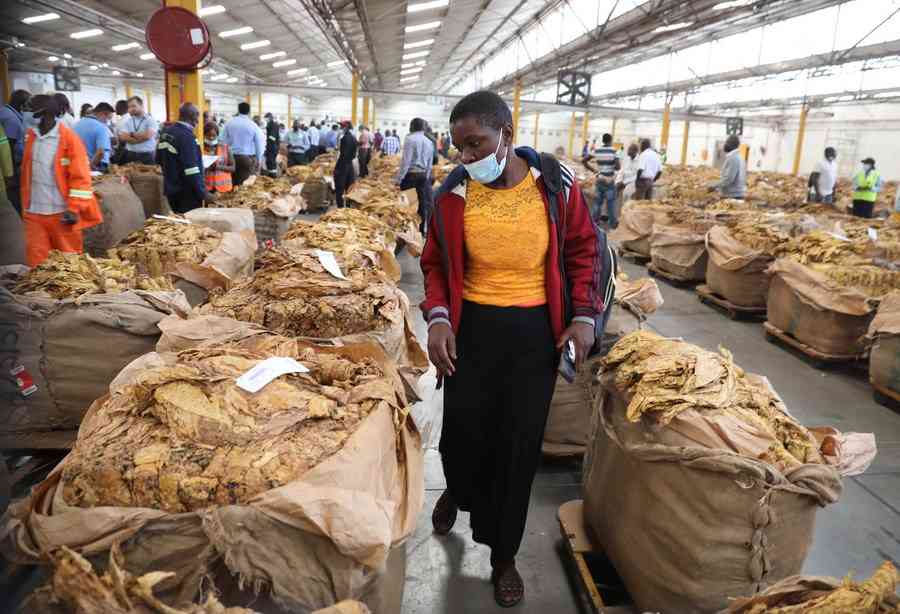
Agriculture remains the backbone of Zimbabwe’s economy, employing an estimated 60% to 70% of the population and contributing significantly to export earnings, food security and rural livelihoods. The sector anchors key value chains such as tobacco, maize, cotton and horticulture, while supporting agro-processing industries and foreign currency generation.
Land policy sits at the centre of this ecosystem. Secure tenure, transparent allocation and effective land administration are widely viewed as critical to unlocking investment, improving productivity and restoring confidence in the sector. Any restructuring of the agriculture ministry, analysts say, will therefore have far-reaching implications not only for politics, but for economic recovery and social stability.
In recent months, agriculture has taken on renewed political importance following a strong rainfall season, rising expectations around output recovery and mounting pressure to improve farmer access to land, finance and inputs. At the same time, unresolved land disputes and tenure uncertainty have continued to deter long-term investment, sharpening the stakes around any changes to how the sector is governed.