THE provision of decent housing has always been one of the major functions of local authorities. Unfortunately, the bulk of Zimbabwe’s urban councils have long reneged on this key function, leaving a gap that has been exploited by land barons, the politically-connected and politicians themselves who have either sold land to desperate citizens or have parcelled it out for political benefit.
On the other hand, the government which is the overall authority, has quietly watched from the sidelines as settlements mushroomed across the country, only to issue ultimatums, threatening settlers with demolition of whatever structure they would have erected.
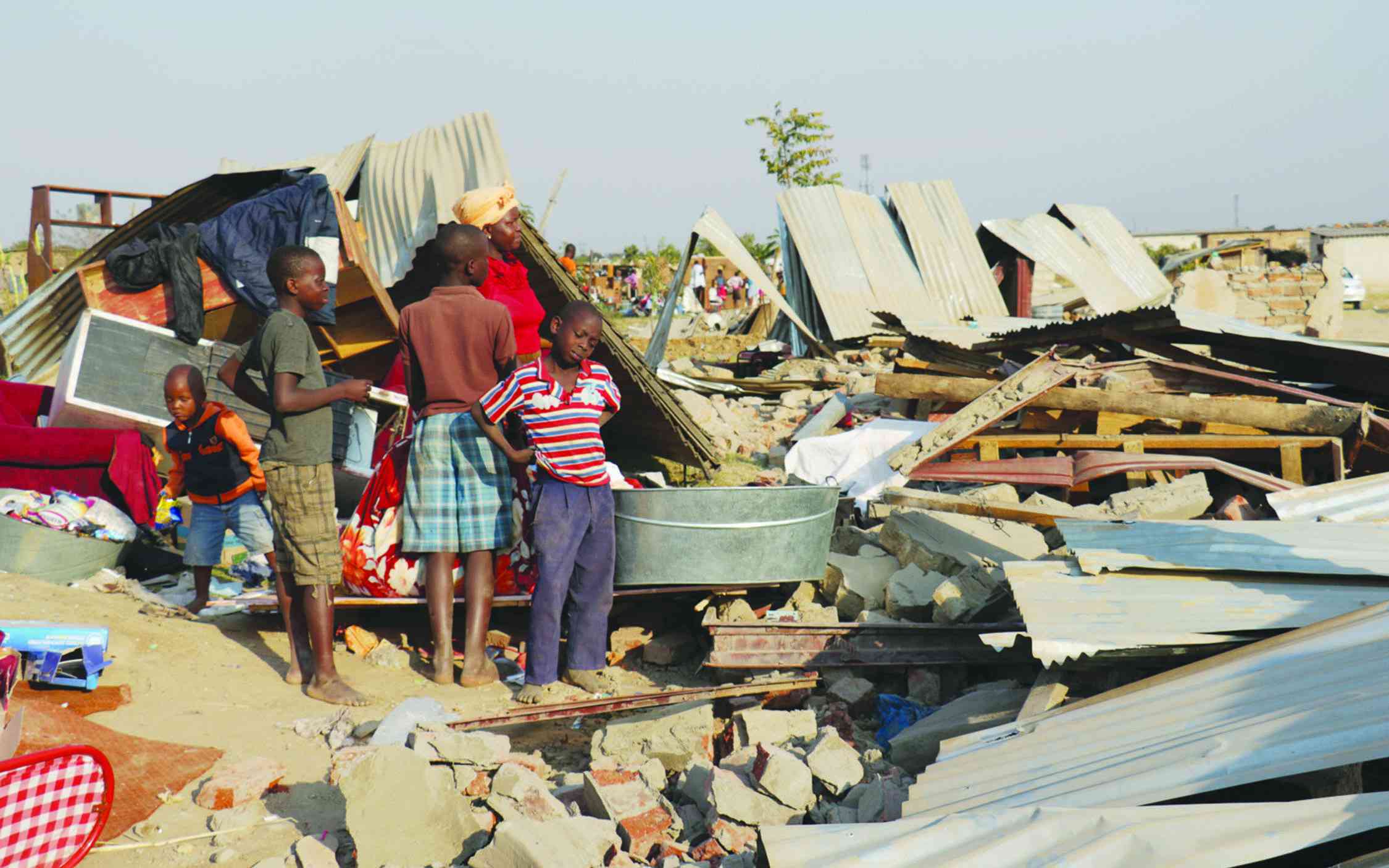
In the process, people lose money they would have invested in these structures, some of which get demolished when they are already complete structures. Citizens — the elderly, women and children included, are thrown out into the cold as menacing earth-moving machines pull down structures.
It is true that people must not just buy land or settle without conducting adequate checks with the requisite local authorities before putting up structures. However, they are often pushed into these situations by poverty and desperation.
They sacrifice the little that they may have to try and put a roof above themselves and their families, but the end is always nasty and they are the net losers.
The real culprits — the land barons and politicians — are never visible at this juncture, while the victims, fleeced of their cash and other property, are left at the mercy of the obtaining inclement weather.
Politicians often promise settlers immunity often in return for support in elections but abandon them when they are needed most — when bulldozers roll in with law enforcement agents, armed with demolition orders that have little consideration for pain and suffering of their poor and desperate victims.
Yet, this is in a country that has laws, by-laws and an existing constitution that spells out expressly that you cannot evict any settler without providing alternative accommodation. No one seems to care about these poor citizens.
- ‘Land baron’ arrested
- ‘Land conflicts, evictions hinder agric productivity
- Unpacking Zim’s Communal Land Act and evictions
- Evicted Masvingo women, children brace for long winter in the cold
Keep Reading
The evicted poor people and their families are already victims of decades of economic turmoil. They only settled because they had lost jobs and no longer had any reliable source of income.
At times, they would have spent their entire working lives on city housing waiting lists for which they were paying religiously until they are out of employment.
They are people who find cheap alternative shelter to avoid rentals and other expenses that they are forced to endure as the economy tanks.
The factories and other entities from which they were shunted were forced to fold as a direct result of policy inconsistency, currency woes, as well as other factors they have no control over.
The latest victims include residents of Warwick Farm, in Zvimba district on the shores of Lake Chivero, many of whom claim they were left behind by the previous farm owner when he lost the land at the height of the land reform programme at the turn of the millenium.
The Warwick Farm evictions came hard on the heels of other evictions at Trelawney Farm where 48 families had their properties razed down to make way for a new owner. Many of the evictees claim some of them were being evicted from houses in which they had lived for over forty years.
At Willdale in Mt Hampden, thousands of people were dumped along the Harare-Chinhoyi highway after being evicted. Although the government later established a temporary relocation site in Nyabira, there is need for permanent social safety nets run by the government, specifically to deal with similar eventualities.
Hundreds of families’ dreams were also shattered when their homes in Goromonzi were demolished and property worth thousands of dollars was also lost in the process.
The families lived by the side of the Harare-Mutare highway for a long time as alternatives proved difficult to come by.
The Harare and Chitungwiza councils have on several occasions been complicit in other waves of evictions carried out in the past with the former razing down complete housing structures in Ridgeview and Belvedere, in the capital and yet they had watched these properties going up.
The Zimbabwe Anti-Corruption Commission was working towards putting in place laws that criminalise illegal activities related to urban State land, but it appears land barons and other unscrupulous individuals have not been deterred from their practices in relation to land corruption.
There are known culprits who have been fingered in land corruption in the past but they seem to have gone scot-free. Urban local authorities left barons invading wetlands and other land reserved for public amenities as well and the problem is now affecting communal land.
The majority of the land barons are often politically-connected individuals who appear to enjoy immunity. The government must put laws in place and these laws must be observed by all and sundry. They should not be laws that are applied against a selected few or political opponents, but should be applied equally and fairly so that at the end of the day, we have a country that has orderly settlements with adequate amenities.
Functional governments and their local authorities ensure this. The government must also ensure this happens with its local authorities. Orderly formal settlements are a product of orderly allocation of land which is controlled by the councils on behalf of the government.
Wilson is the founder and leader of the Democratic Official Party.