Africa’s migration crisis deepened this week as a series of developments stretching from Ireland to the Horn of Africa exposed growing pressure on undocumented migrants and tougher immigration policies across the continent and beyond.
In a development rich with irony, South Africa — itself carrying out a controversial crackdown on illegal immigrants — found itself on the receiving end of similar measures after Ireland deported 42 of its nationals found to be living illegally in that country.
The deportations came as Somaliland ordered undocumented foreign nationals to leave the territory within 10 days or face legal action, while Botswana said it was closely monitoring developments in neighbouring South Africa, as fears mounted anti-migrant tensions there could trigger an influx into its own borders.
The developments pointed to a trend in which governments facing economic, social and security pressures turning to tougher positions on undocumented migration.
The pressure is already being felt across southern Africa.
Channel Africa reported more than 3 000 undocumented Malawians have been forced out of South Africa through the Beitbridge Border Post since last week as authorities intensified operations.
Twelve more buses carrying undocumented Malawian immigrants were processed and cleared for deportation on Sunday morning, according to the report.
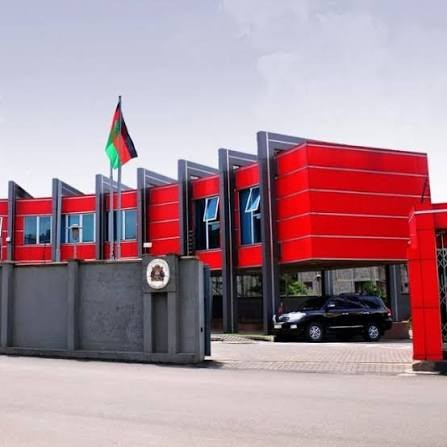
A representative of the Malawian Embassy, Hazvinei Vambe, said more undocumented Malawian nationals were expected to be deported through Beitbridge in the coming days.
- Zim headed for a political dead heat in 2023
- Record breaker Mpofu revisits difficult upbringing
- Tendo Electronics eyes Africa after TelOne deal
- Record breaker Mpofu revisits difficult upbringing
Keep Reading
“The repatriation process has been going well. Malawians are going home, ladies, their children, the men -all of them are going home,” she was quoted by Channel Africa as saying.
“The processes are a bit long at the borders, the paperwork and all, but eventually we are managing to repatriate our Malawians.
“Approximately 3 000 have already passed, or more, and we are expecting the same number to continue with the process. They are from Durban mostly and Cape Town, and they are on their way to Malawi,” Vambe said.
The expulsions come at a sensitive moment for South Africa, where anti-migrant groups have been campaigning for undocumented foreign nationals to leave by June 30, intensifying an already heated debate over migration, unemployment and access to public services.
Business Insider Africa said Ireland had deported 42 South Africans at an initial cost of €735 000 (US$853 000).
According to the Irish Times, deportation orders were issued after the individuals were found to be living illegally.
Among those deported were 27 adults, including nine men and 18 women, as well as 15 children travelling as part of family groups. Irish authorities said two of the deportees had criminal convictions.
“Gardaí continue to work closely with the Department of Justice in implementing immigration policy and the Irish Prison Service in the implementation of these operations,” an Irish official was quoted by the newspaper as saying.
Full article on www.theindependent.co.zw
South Africa is considered a safe country by Irish authorities, although South Africans can still apply for asylum if they provide documentary proof that they face genuine threats.
Ireland's Minister for Justice, Jim O'Callaghan, defended the operation, saying most South Africans living in Ireland were in the country legally.
"Our immigration system must be rules-based and robust," he said.
"The enforcement aspects of our laws, including deportation orders, are an essential requirement for the system to work effectively and to ensure there is public confidence in the application of our legislation in this area."
The deportations have sparked interest across Africa because they come at a time when South Africa itself is under growing pressure over undocumented migration.
Africa's largest economy has served as a magnet for migrants from Zimbabwe, Malawi, Mozambique, Nigeria, Ghana and the Democratic Republic of Congo seeking better economic opportunities.
However, unemployment standing at 32,7% during the first quarter of 2026 has intensified competition for jobs and public services, fuelling tensions in many communities.
South Africa has also experienced recurring outbreaks of xenophobic violence targeting foreign nationals, informal traders and foreign-owned businesses.
Elsewhere, Somaliland signalled its own hardening stance on migration.
MSN reported this week that Somaliland had ordered all foreigners residing illegally in the territory to leave within 10 days or face legal action.
Speaking in Hargeisa, Somaliland's State Minister for Interior, Abdirashid Mohamed Hassan, popularly known as Magaalo, said the directive was linked to national security concerns.
"Illegal foreigners must leave the country within 10 days," the minister said.
The announcement comes amid heightened security concerns across the Horn of Africa, where governments have increasingly tightened border controls and immigration measures in response to regional instability and security threats.
Meanwhile, Botswana has moved onto high alert as authorities assess the possible impact of developments in South Africa.
The Patriot on Sunday reported that Botswana's government was drawing up contingency plans amid concerns that anti-migrant tensions in South Africa could trigger population movements towards neighbouring countries.
Officials have reportedly increased vigilance along border areas while monitoring events south of the border.
Taken together, the developments demonstrated the growing complexity of migration across Africa.
Economic hardship, unemployment, insecurity and regional instability continue to drive people across borders in search of opportunities and safety. Yet governments facing their own economic and social pressures are responding with stricter immigration controls and more aggressive enforcement measures.