A ZiG1,2 billion facility established by the Reserve Bank of Zimbabwe (RBZ) over a year ago has largely been ignored by the country’s lenders, with executives saying it is too expensive, while the apex bank has expressed “disappointment” over the slow uptake.
The Targeted Finance Facility (TFF) was earmarked to bolster Zimbabwe’s private sector, which is grappling with borrowing costs of up to 47%, according to the Zimbabwe National Chamber of Commerce.
The RBZ has kept its policy rate at around 35% for some time, far higher than the annual inflation rate. However, the Zimbabwe Independent established that only a fraction of the funds has been taken up by banks for on-lending to the market, leaving the bulk of the facility idle.
It is one of the rare instances where significant liquidity remains unused in a market where industry continues to struggle for affordable credit.
The Bankers Association of Zimbabwe (BAZ) this week backed the facility, describing it as a critical component of ongoing recovery efforts. However, senior bankers say tapping into the fund would not make commercial sense under current conditions.
Senior bankers who spoke on condition of anonymity said the core issue was not liquidity availability, but pricing.
“The real reason is the money is extremely expensive,” one executive said.
“Inflation is below 5% per annum. At times, the same central bank says it’s 1% or 0%, which means there is no inflation. When there is no inflation, it means prices are not increasing.”
- RBZ blocks Harare US dollar charges
- Industry cries foul over new export surrender requirements
- One stitch in time saves nine
- Banks keep NPLs in safe territory
Keep Reading
The TFF is offered at 30% interest per annum.
“The central bank itself wants to lend the ZiG1,2 billion to the banking sector at 30% per year. If you take money at 30% per year, you are either going to add between 5% and 10% as your margin, depending on the riskiness of the customer.”
“You can’t take money at 30% from the central bank and then give it to a customer at 30% or at 20%. So, chances are you give it to the customer at between 35% and 40%.”
At those levels, bankers say lending becomes economically irrational for most borrowers operating in a low-inflation environment.
“If prices are not increasing, what kind of business gives you 40% per year as a margin?”
The pressure is compounded by rising input costs across the economy, including energy, fuel and labour, further eroding already thin margins.
“But that’s not the only cost,” the banker said. “The price of energy is going up, fuel has gone up, labour has gone up. So, if you are just going to be paying 40% to access a credit line, you are going to be making massive losses.”
“The only reason anyone would borrow at 40% is if that person is speculating that the currency is going to depreciate. Therefore, the value of the loan becomes less in hard currency terms,” he said.
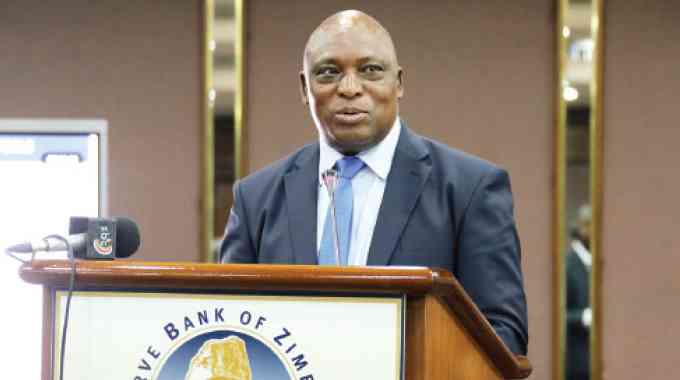
In emailed responses to the Zimbabwe Independent, RBZ governor John Mushayavanhu raised concern over the subdued uptake of the facility.
In his detailed response, Mushayavanhu said while market segmentation may be creating liquidity gaps among banks, the central bank has already intervened through the funding window.
“While the market segmentation may cause liquidity gaps among banks, the Reserve Bank has provided additional liquidity through a Targeted Finance Facility to the tune of ZiG1,2 billion, which can be easily accessed by banks to fund the productive sector,” he said.
He noted, however, that utilisation remains extremely low.
“It is, however, disappointing to note that, as at April 15, 2026, only ZiG56,9 million of the ZiG1,2 billion had been drawn down, indicating that banks have access to over ZiG1 billion through this window.
“Sufficient liquidity, therefore, is available within the financial system, and banks are encouraged to access these resources on behalf of their qualifying clients.”
According to the central bank, the underutilisation reflects reluctance by banks rather than a shortage of funds, with authorities insisting that liquidity is available for lending into the real economy.
However, bankers maintain that demand is constrained by pricing realities.
“Our customers tell us they cannot borrow at those levels when inflation is low and the exchange rate is not depreciating. Not that they want depreciation — but without it, they are effectively borrowing at 30% to 40%. That’s the real reason.”
The standoff highlights a growing policy dilemma.
While authorities insist liquidity is sufficient, pricing distortions are preventing transmission into credit growth, leaving significant lending capacity idle within the financial system.
Contacted for comment, BAZ chief executive officer Fanwell Mutogo said the current utilisation levels should not be interpreted as failure by financial institutions.
“The Bankers Association of Zimbabwe welcomes the opportunity to provide context regarding the utilisation of the ZiG1,2 billion Targeted Finance Facility.
“It is important to clarify that the current utilisation level of ZiG56,9 million does not indicate a failure on the part of financial institutions to support the economy. Rather, the deployment of these funds is a calibrated process governed by the specific requirements of the market.
“Key considerations for fund uptake include demand-driven allocation: Banks act as intermediaries that on-lend funds based strictly on the actual credit demand and viable applications received from the productive sectors.
“Supplementary nature of the facility: This facility was promulgated to substantiate and complement existing lines of credit already available within the banking sector. It serves as an additional resource to the lines of credit,” Mutogo said.
l Exchange rate as of April 15, 2026: US$1 = ZiG25,2